Why Mr and Mrs Andrews by Thomas Gainsborough Is My Favourite Painting

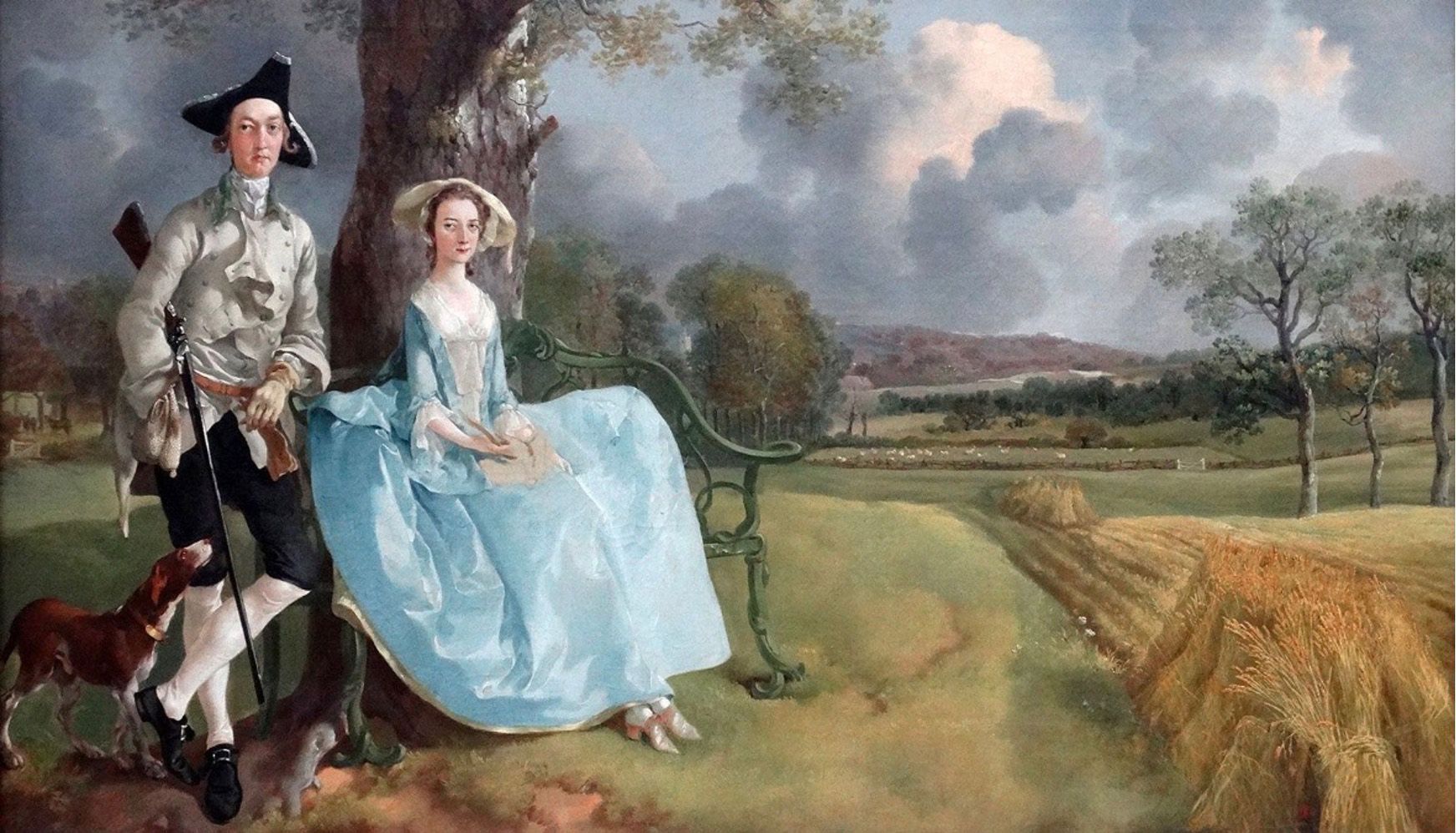
As an art teacher, one of the questions I’m asked most often is, “What’s your favourite artist?” I never quite know how to answer. It’s an impossible choice. There are simply too many artists whose work I admire for different reasons. However, when it comes to choosing my favourite painting, the answer comes much more easily. Without hesitation, I always return to Mr and Mrs Andrews by Thomas Gainsborough.

This painting fascinates me every single time I look at it. Not because it is the most technically perfect painting ever created, nor because it tells us a clear story. In fact, it’s quite the opposite. It’s the mystery, the psychology, and the unanswered questions that make it, in my opinion, one of the most compelling paintings in British art.


Mrs Andrews Doesn’t Want to Be There


The first thing I always notice—and the first thing I point out to my students—is Mrs Andrews herself.

She doesn’t look comfortable. She doesn’t look relaxed. And most importantly, she doesn’t look happy.

Her posture is stiff and closed. Her arms are folded tightly in her lap. Her body angles slightly away from her husband. There is no warmth between them, no shared glance, no connection. She appears as if she has been placed there rather than choosing to be there.

In contrast, Mr Andrews seems perfectly at ease. He stands confidently, legs apart, leaning casually on his gun. His stance is open, relaxed, and self-assured. He belongs.

This contrast tells us so much without a single word being spoken.


It makes me wonder: was Mrs Andrews made to dress up and sit for this portrait to support her husband’s ambitions?


Mr Andrews and His Aspirations


Robert Andrews was a wealthy landowner, but wealth and status were not always the same thing in 18th-century England. The painting feels, to me, like a statement. A declaration.


Look at what surrounds him.


Not just his wife—but his land.


The carefully cultivated fields stretch into the distance. This isn’t just a portrait of a couple. It’s a portrait of ownership, success, and aspiration.


He isn’t simply saying, “This is my wife.”

He’s saying, “This is my world.”


His gun suggests leisure and privilege. He does not need to work the land himself. He owns it.


Mrs Andrews, meanwhile, feels almost like another symbol of that success.


Why Choose Gainsborough?

This is where the story becomes even more interesting.

Gainsborough was, at heart, a landscape painter. He loved painting nature. In fact, landscapes were his passion.

Portraits, on the other hand, were how he earned his living.

So why would Mr Andrews choose Gainsborough?

One possibility is practical: Gainsborough was local to the Andrews’ area of Suffolk. It would have made sense to hire a talented local artist.


Another possibility, which I find particularly intriguing to discuss with students, is that Gainsborough offered something other portrait painters didn’t.


He could paint land beautifully.


And in this portrait, the land is just as important as the people.


In fact, I’d argue it’s the real subject of the painting.

Was Gainsborough chosen because he was cheaper than more established London portrait artists? Perhaps.


Or was he chosen because he could immortalise not just the Andrews themselves, but their success, their property, and their place in society?


The Mystery of the Unfinished Lap


And then there is the detail that fascinates me most of all.

Mrs Andrews’ lap.


It’s unfinished.


There is a strange, empty area where something should be—but isn’t.


For an artist as skilled as Gainsborough, this would not have been an accident.


So, what was supposed to be there?


Art historians have suggested several possibilities.


Perhaps a book. Perhaps embroidery.


But the theory that captures my imagination—and the imagination of my students—is this:


Was there supposed to be a baby?


This portrait was painted shortly after their marriage. A child would have represented security, legacy, and the continuation of the family line.


Was Gainsborough leaving space to add a future child?


And if so… why was it never completed?


Did the baby never arrive?


We don’t know.


And that’s what makes it so powerful.


A Painting Full of Questions


This painting never gives us answers. Only clues.

It invites us to interpret body language. To question relationships. To think about status, ambition, gender roles, and identity.


It reminds my students—and me—that paintings are not just images.


They are stories.


Sometimes happy ones.


Sometimes uncomfortable ones.


And sometimes unfinished ones.


Why It Will Always Be My Favourite


I love this painting because it sparks conversation every single time.


Students notice Mrs Andrews’ expression almost immediately. They begin to create their own narratives. They engage. They question.


It proves that art is not about finding the “right” answer.

It’s about looking. Thinking. Wondering.


And more than anything, it shows that even a painting created over 270 years ago can still make us feel curious today.


That is why Mr and Mrs Andrews will always be my favourite painting.


You can see this extraordinary painting in real life at the National Gallery, London. It’s definitely worth a visit.


Recent Posts

February 17, 2026
When was the last time you picked up a pencil — or even a pen — and just… drew? Not to show anyone. Not to be perfect. Just to draw.
February 17, 2026
Finding your own art style is one of the most exciting and frustrating parts of being an artist. Many beginners worry they don’t have a style yet, but the truth is your style develops naturally over time. It’s not something you force. It’s something you discover. Below is a simple guide to help you find your unique artistic voice. 

Share this article